Crispy chicken tenders are a guilty pleasure that never gets old, especially when you make them at home with that perfect crunch. It’s all about the texture—double-coating, twice the crunch, no shortcuts. I’ve learned that the key is patience and a steady hand, taking your time to get that coating just right.
This recipe isn’t about fast food, it’s about taking a bit of extra care to create something that feels indulgent and satisfying. There’s a certain joy in biting into a tender, juicy piece of chicken that’s been coated in a crispy shell—more than just comfort food, it’s a small celebration of honest cooking. And once you get the hang of that double-coating, you’ll never go back to store-bought again.
Focusing on the importance of texture and crunch, this recipe emphasizes a double-coating technique that creates an irresistibly crispy exterior, making homemade chicken tenders feel more indulgent and satisfying than fast-food versions.
Crunchy Coating Secrets
- I remember the first time I nailed that perfect crunch; it felt like a small victory after many tries.
- There’s a chaos in the kitchen when I double-coat, but it’s always worth the messy hands and sizzling oil.
- Nothing beats the warm smell of seasoned chicken filling the house—it’s a nostalgic call back to family dinners.
- I take pride in making these tenders crispy on the outside and tender inside—simple, honest cooking.
- Whenever I make this recipe, I feel a little bit like a kid again, eager for that first crunchy bite.
The story behind this recipe
I once got a craving for chicken tenders during a chaotic week, and instead of settling for takeout, I decided to experiment with making my own. That first batch was a disaster—oil splatters, uneven coating, but I learned a lot in the process. Over time, I started perfecting the double-coating technique, aiming for that elusive crispy exterior and juicy inside. Now, this recipe feels like a small rebellion against the fast-food rush, a way to reclaim comfort food with honest, homemade goodness.
Historical & Cultural Insights
- Chicken tenders became a popular fast-food item in the 1950s, with chains like Kentucky Fried Chicken pioneering their crispy style.
- The double-coating technique for extra crunch was likely developed by home cooks experimenting with breading layers in the early days of fried chicken recipes.
- In the Midwest, chicken tenders are often called ‘chicken strips’ and are a staple at local diners and barbecues, evolving from traditional fried chicken pieces.
- Originally, chicken tenders were made from the tenderloin part of the chicken, which is naturally tender and perfect for quick cooking and breading.
- The idea of customizing chicken tenders with spices and coatings has roots in Southern comfort food, where bold flavors and crispy textures are highly valued.
Key Ingredients for Perfect Tenders
- Chicken breasts: I prefer skinless, boneless breasts—they stay juicy and cook evenly. Skip the skin for a cleaner bite, but keep an eye on moisture levels.
- Flour: I use all-purpose flour for the coating—it’s reliable and gives a nice crisp. Experiment with a touch of cornstarch for extra crunch if you like a lighter shell.
- Egg wash: Beaten eggs help the coating stick; I sometimes add a splash of hot sauce for a bit of smoky heat that seeps into the crust.
- Breadcrumbs: Panko breadcrumbs give the tenders a serious crunch—look for the big, flaky kind. Toast them lightly for a nuttier flavor before coating.
- Seasonings: Salt, pepper, garlic powder, paprika—these are my staples. Feel free to toss in a pinch of cayenne or herbs to customize your flavor profile.
- Oil: Neutral oil like vegetable or canola—hot enough (around 180°C/350°F)—the sizzle should be lively but not smoke. Keep a close eye to avoid burning.
- Lemon: Brightens the whole thing—just a squeeze after frying boosts the flavor and adds a fresh zing that cuts through the richness.
Spotlight on key ingredients
Chicken breasts:
- I prefer skinless, boneless breasts—they stay juicy and cook evenly. Skip the skin for a cleaner bite, but keep an eye on moisture levels.
- Flour: I use all-purpose flour for the coating—it’s reliable and gives a nice crisp. Experiment with a touch of cornstarch for extra crunch if you like a lighter shell.
- Egg wash: Beaten eggs help the coating stick; I sometimes add a splash of hot sauce for a bit of smoky heat that seeps into the crust.
Breadcrumbs:
- Panko breadcrumbs give the tenders a serious crunch—look for the big, flaky kind. Toast them lightly for a nuttier flavor before coating.
- Oil: Neutral oil like vegetable or canola—hot enough (around 180°C/350°F)—the sizzle should be lively but not smoke. Keep a close eye to avoid burning.
- Lemon: Brightens the whole thing—just a squeeze after frying boosts the flavor and adds a fresh zing that cuts through the richness.
Notes for ingredient swaps
- Dairy-Free: Use almond milk or water in the egg wash—won’t have the richness of eggs but still helps coatings stick.
- Gluten-Free: Swap all-purpose flour with rice flour or a gluten-free blend—crispiness remains, but watch for some dryness.
- Low-Sodium: Use salt-free seasonings and skip added salt; focus on herbs and spices for flavor punch.
- Breadcrumbs: Panko for crunch, but crushed cornflakes or crushed potato chips work great for a different crispy texture.
- Oil: Avocado oil or light-tasting oils can replace vegetable oil—keep the heat consistent, they handle higher temps better.
- Spicy Kick: Add cayenne or hot sauce to the egg mixture—gives heat without changing the breading process.
- Lemon: Fresh lemon zest mixed into the coating or a squeeze after frying brightens flavor without extra prep.
Equipment & Tools
- Shallow dishes and bowls: For coating ingredients and station setup.
- Deep skillet or Dutch oven: For frying the tenders evenly and safely.
- Tongs or slotted spoon: To handle hot tenders without splashes or burns.
- Thermometer: To monitor oil and internal chicken temperature.
- Wire rack or paper towels: To drain excess oil and keep tenders crispy.
Step-by-step guide to chicken tenders
- Equipment & Tools: Use a shallow dish for flour, a wide bowl for eggs, and a baking sheet or wire rack for coating. Tongs help handle the chicken without mess.
- Cut chicken breasts into strips about 1 inch wide—uniform sizes help with even cooking. Pat dry to help coatings stick.
- Prepare the coating stations: first, dredge in seasoned flour, tapping off excess; second, dip in beaten eggs, letting excess drip off; third, coat generously with panko breadcrumbs, pressing lightly.
- Heat oil in a deep skillet or Dutch oven to 180°C (350°F). Test with a breadcrumb—if it sizzles and rises, you’re ready.
- Carefully place tenders in hot oil, working in batches. Fry for 3-4 minutes, turning occasionally. They should turn golden and crispy. If oil smokes or tenders burn, lower heat slightly.
- Use tongs or a slotted spoon to transfer tenders to a paper-lined tray. Check for a deep golden color and an internal temp of 75°C (165°F).
- Step 6a: Rest the tenders for 2-3 minutes—this helps juices redistribute and keeps the coating crispy.
- Step 6b: Serve immediately with your favorite dipping sauces. For extra crunch, sprinkle a little flaky sea salt right after frying.
Rest the tenders for 2-3 minutes on a wire rack or paper towels. Serve hot with dipping sauces, or let cool slightly for a crunchier exterior before plating.
How to Know It’s Done
- Color should be deep golden and crispy outside.
- Internal temperature reaches 75°C (165°F).
- Tender is juicy and not rubbery when pressed lightly.
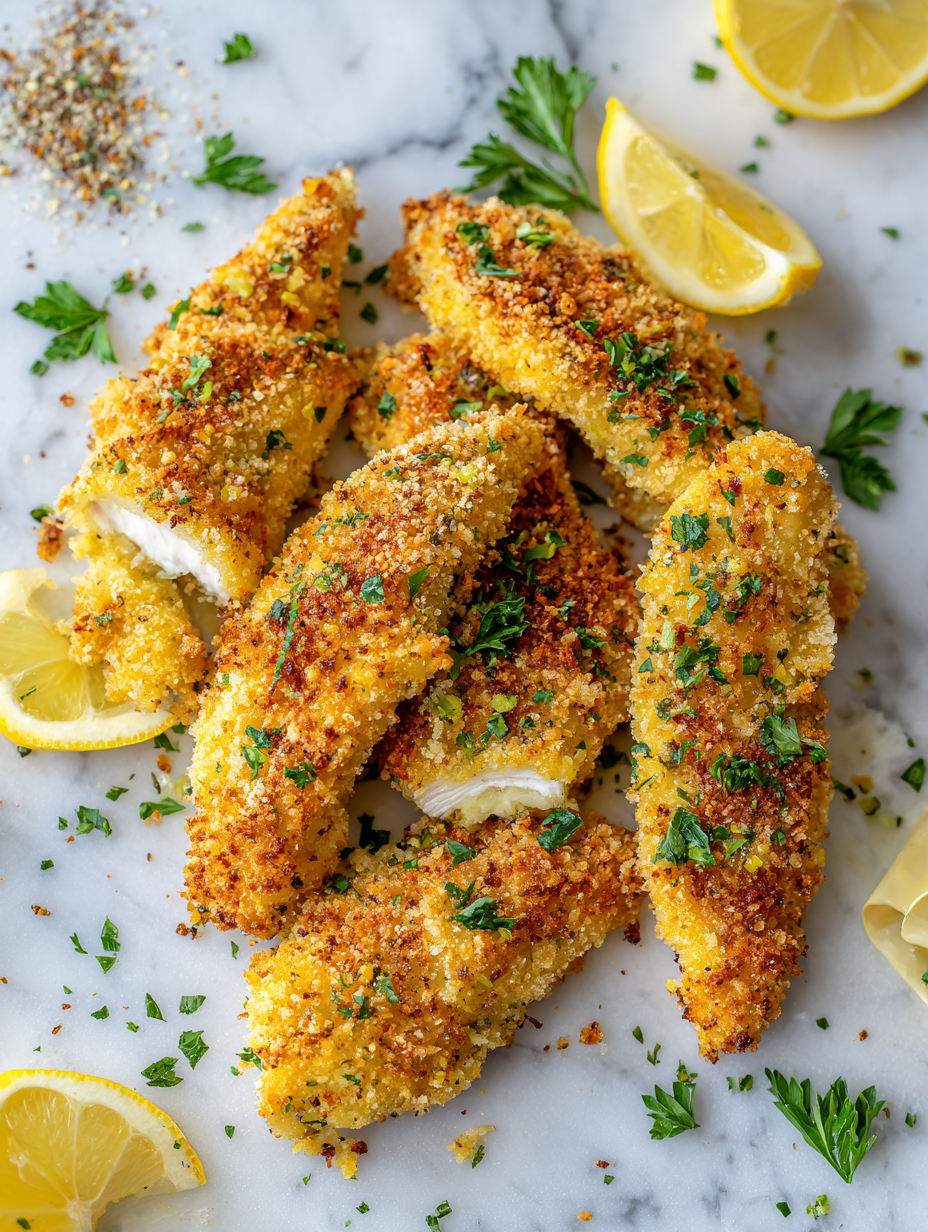
Homemade Crispy Chicken Tenders
Ingredients
Equipment
Method
- Start by drying the chicken strips with paper towels to remove excess moisture, which helps the coating stick better and reduces splattering during frying.
- Set up your coating stations: place the seasoned flour in one shallow dish, beaten eggs in a second, and toasted panko breadcrumbs mixed with salt, pepper, and paprika in a third.
- Dredge each chicken strip in the flour, pressing lightly to coat evenly. Shake off any excess flour.
- Dip the floured chicken strip into the beaten eggs, letting the excess drip off to avoid clumping.
- Press the chicken into the panko breadcrumbs, coating thoroughly and pressing lightly to ensure the crumbs adhere, repeating the double-coating process for extra crunch if desired.
- Pour enough oil into a deep skillet or Dutch oven to submerge the tenders halfway, and heat it over medium-high heat until it reaches 180°C (350°F). Use a thermometer to check the temperature for accuracy.
- Carefully place the coated chicken tenders into the hot oil using tongs, working in small batches to avoid overcrowding. Fry for 3-4 minutes, turning occasionally, until they turn golden brown and crispy.
- Use tongs to transfer the fried tenders to a wire rack or paper towels to drain excess oil. Check that the internal temperature reaches 75°C (165°F) for safety.
- Squeeze fresh lemon juice over the tenders immediately after frying to add brightness and enhance flavor.
- Serve the tenders hot with your favorite dipping sauces, and enjoy that perfect crunch with every bite.
Notes
Pro tips for crispy tenders
- Bolded: Use a double-coat for maximum crunch—dip twice in egg and breadcrumbs, then fry for a crispy shell.
- Bolded: Keep oil temperature steady at 180°C (350°F)—use a thermometer to prevent sogginess or burning.
- Bolded: Lightly toast panko breadcrumbs before coating—adds a nutty flavor and extra crunch with less oil absorption.
- Bolded: Rest cooked tenders for 2 minutes before serving—helps juices settle and keeps coating crispy.
- Bolded: Use tongs for handling chicken—avoids breaking the coating and keeps your fingers clean.
- Bolded: Add a splash of hot sauce or lemon zest to the egg wash—injects subtle flavor and enhances the crust’s flavor.
- Bolded: Fry in small batches—avoids overcrowding, which drops oil temperature and results in limp tenders.
Common mistakes and how to fix them
- FORGOT to dry chicken thoroughly → Moisture causes splattering; pat dry for crisp coating.
- DUMPED too much oil in pan → Use enough oil to submerge tenders halfway, not more.
- OVER-TORCHED the coating → Keep oil at consistent 180°C (350°F); adjust heat as needed.
- SKIPPED resting time → Rest for 2-3 minutes to keep tenders juicy and coating crispy.
Quick fixes and pantry swaps
- IF oil smokes, splash a splash of water to calm it down.
- WHEN coating feels uneven, patch with extra breadcrumbs for even crunch.
- SPLASH lemon juice after frying to enhance brightness and cut greasiness.
- IF tenders are soggy, rescue by a quick 2-minute oven reheat at 190°C (375°F).
- PANTRY SWAP: Use crushed cornflakes instead of breadcrumbs for a different crispy texture.
Prep, store, and reheat tips
- Prep the chicken tenders: cut into strips and bread up to a day ahead; keep refrigerated and covered to prevent drying out.
- Store cooked tenders in an airtight container in the fridge for up to 2 days; reheat for a crunchy comeback, not soggy.
- Reheat in a hot oven (190°C/375°F) for 8-10 minutes until crispy and heated through—avoid microwave to keep crunch.
- For freezer stash, freeze cooked or uncooked tenders on a tray, then transfer to a bag; they’ll last 1-2 months. Reheat from frozen in the oven, adding a few extra minutes.
- Flavor may mellow slightly after storage—adding a fresh squeeze of lemon or a sprinkle of herbs before serving revives brightness.
Top questions about chicken tenders
1. Can I use chicken thighs instead of breasts?
Use chicken breasts for tender, juicy strips that hold up well when fried and coated. If you want a leaner option, chicken tenders from the tenderloin work great, but thighs can be a juicier, slightly richer alternative if you don’t mind a bit more fat.
2. How do I get extra crispy tenders?
For a crispier coating, double-coat the tenders—dip in flour, egg, then breadcrumbs, and repeat. Using panko breadcrumbs also adds extra crunch. Keep the oil temperature steady at 180°C (350°F) to prevent sogginess.
3. Why is my coating falling off?
Make sure to dry the chicken thoroughly before coating. If the coating isn’t sticking, it’s likely too wet or the oil isn’t hot enough. Rest the coated tenders for a few minutes before frying for better adhesion.
4. Why are my tenders greasy and soggy?
Fry in small batches to keep the oil temperature consistent. Overcrowding causes the oil to drop in heat, making tenders greasy and limp instead of crispy. Use a thermometer to monitor the oil’s heat.
5. How can I make the tenders more flavorful?
Adjust seasonings to taste, but a pinch of paprika and garlic powder adds flavor without overpowering. You can also toss in some cayenne for heat or herbs for freshness. Taste your coating mix before frying.
6. Can I oven-bake these chicken tenders?
Yes, you can bake the tenders at 200°C (400°F) for about 15-20 minutes, flipping halfway. They won’t be quite as crispy as fried but still tasty. For extra crunch, broil for the last 2 minutes.
7. How do I reheat leftovers?
Store cooked tenders in an airtight container in the fridge for up to 2 days. Reheat in a hot oven (190°C/375°F) for 8-10 minutes until crispy. Microwaving will make them soft and less crunchy.
8. How do I avoid oil splatters?
To prevent splattering, make sure the oil is at the right temperature, and don’t overcrowd the pan. Use tongs to carefully lower tenders into hot oil, and fry in small batches for safety and even cooking.
9. What if the oil smokes?
If the oil starts to smoke, lower the heat immediately. Keep a splash of water handy to calm small flare-ups. Use a thermometer to maintain a steady frying temperature of 180°C (350°F).
10. What are the essential ingredients?
The key ingredients are chicken, flour, eggs, and breadcrumbs. Use fresh, good-quality ingredients for best flavor. A squeeze of lemon after frying brightens the flavor and enhances the crispy shell.
There’s something about that perfect crunch and juicy interior that keeps me coming back to this recipe. Making chicken tenders at home feels like reclaiming a childhood favorite, but with a bit more control over the flavor and crispiness. Plus, the smell of hot oil and seasoned breading filling the kitchen is a small, satisfying triumph.
In the end, it’s the simple act of frying up something homemade that offers a break from the chaos of daily life. These tenders come together quickly and offer a moment of honest, comforting cooking—something to share with friends or keep all to yourself on a busy weeknight.

Hi, I’m Michael Anderson, the voice behind Overreacting To Salt. Yes, the name usually gets a laugh. And no, I am not actually afraid of salt. In fact, understanding salt and flavor balance is what inspired this entire blog.
 The voice behind Overreacting To Salt. Yes, the name usually gets a laugh. And no, I am not actually afraid of salt. In fact, understanding salt and flavor balance is what inspired this entire blog.
Overreacting To Salt is my space to talk honestly about cooking mistakes, kitchen wins, and the small details that make a big difference in flavor. I created it for home cooks who want to understand food better without feeling intimidated.
The voice behind Overreacting To Salt. Yes, the name usually gets a laugh. And no, I am not actually afraid of salt. In fact, understanding salt and flavor balance is what inspired this entire blog.
Overreacting To Salt is my space to talk honestly about cooking mistakes, kitchen wins, and the small details that make a big difference in flavor. I created it for home cooks who want to understand food better without feeling intimidated.